Why Give Away
Beats?
It's a fair question. Hundreds of beats, no price tag, no catch. If you've ever wondered what's actually going on there, this is the honest answer.
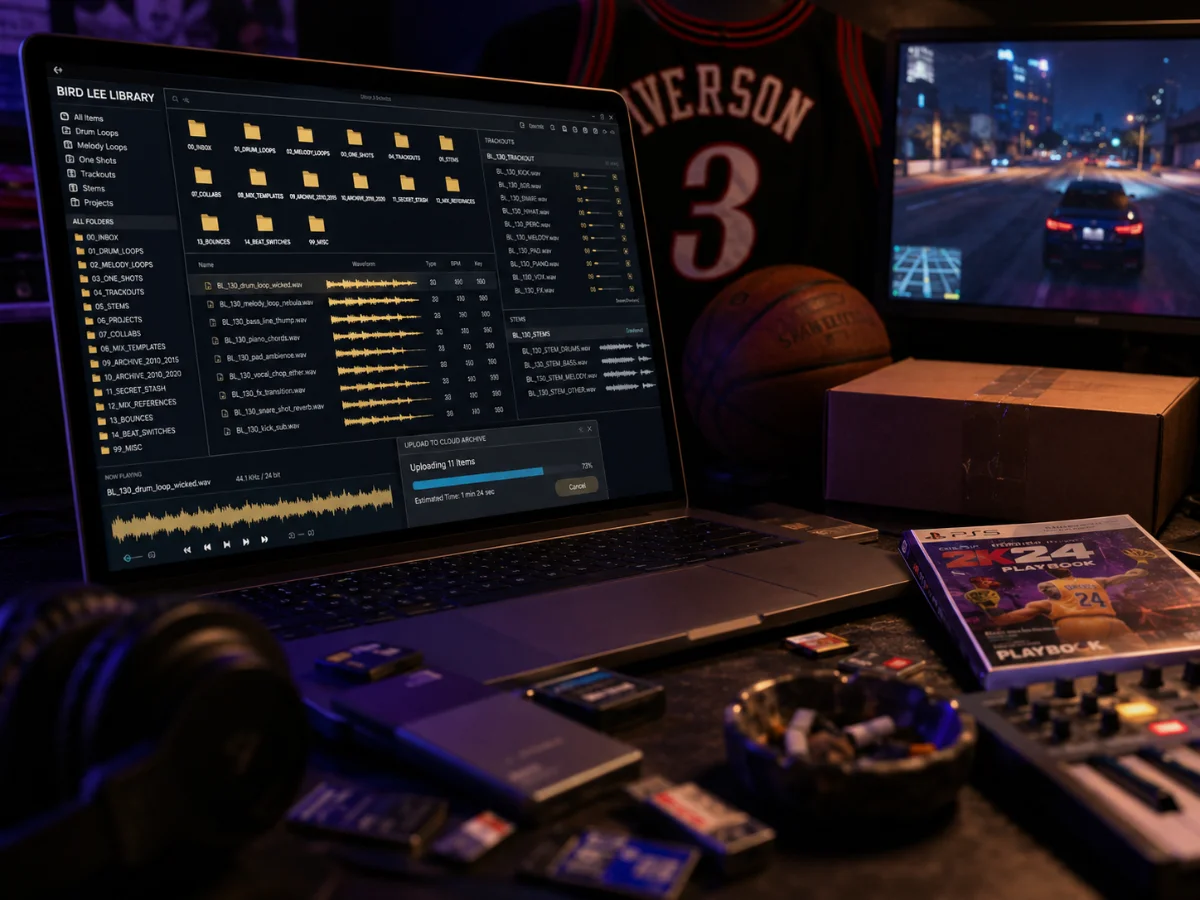
It starts with the loop.
Most modern beats aren't built from scratch. They're built around samples — pre-recorded melodies, drums, chords, and textures created by someone else and made available through platforms like Splice. A producer hops on, browses the library, finds something that fits the vibe, downloads it, and builds a beat around it. The loop is labeled royalty-free. The license is real. Everything looks clean on the surface.
But here's what that label doesn't tell you: that same loop is sitting in a library that millions of other producers have access to. In 2024 alone, nearly 350 million samples were downloaded from Splice. Hip-hop was the number one most downloaded genre for the third year in a row. That one loop a producer just grabbed? Thousands of other people may have grabbed it too.
The beat gets finished. It sounds good. It goes up for sale. And the problem is already baked in — it just hasn't shown up yet.
Now multiply it.
That producer isn't the only one who built a beat with that loop. Dozens of other producers downloaded the same sample and built their own beats around it. Different sounds, different arrangements — but the same underlying audio at the core.
Each of those producers puts their beats on the market. And because most beats are sold as non-exclusive leases, that same beat gets sold to multiple artists. One producer, one beat, ten — maybe fifty — buyers. Each one goes off and records their song, uploads it to Spotify, Apple Music, YouTube, wherever their audience is.
Now take that and multiply it across every producer who used that same loop.
You have one sample fingerprint living inside potentially hundreds of beats, spread across potentially thousands of songs, uploaded across every major platform by artists who had no idea any of this was happening when they bought the beat.
And if that producer posted the beat on YouTube first — which is standard practice, that's how type beats work — it gets worse. Free downloaders grab it straight from the video. People who never licensed anything, never had a conversation with anybody, just took the beat and ran with it. More uploads. More fingerprints in the system. More surface area for a Content ID match to land on.
Nobody in that chain necessarily did anything wrong. But the exposure compounds at every single step.
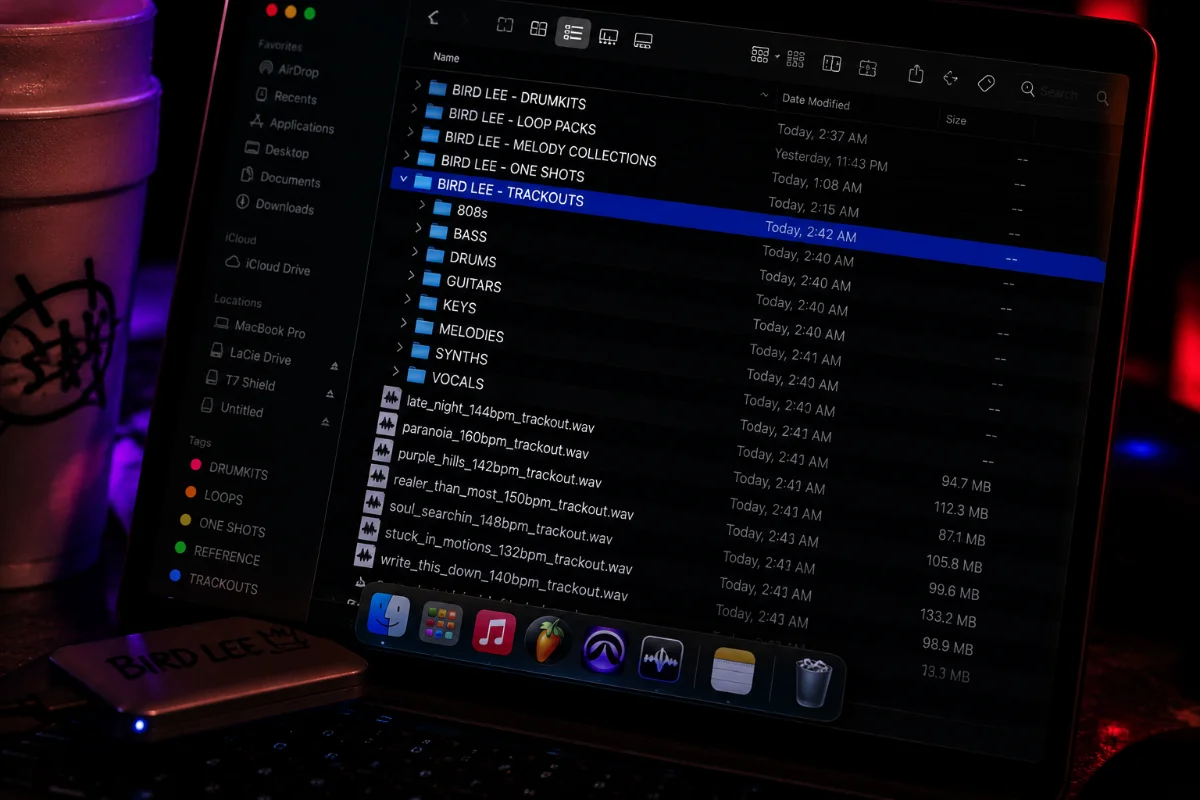
And the artist at the end of the chain has no idea.
They bought a beat. They recorded their song. They went to upload it and something blocked them — or their ad revenue got redirected, or their distributor flagged it. The claim isn't against them personally. It's against the content. But they're the ones dealing with it.
The producer already moved on. Already made the next beat. Already made the next sale.
That's the part that sat with me.
I make beats the same way. Third-party loops, Splice, sample packs — that's part of how I work. I'm not standing outside of this pointing fingers. I'm in it. And because I'm in it, I know exactly what comes with these beats when they leave my hands.
So I made a decision: I'm not going to charge you for that uncertainty.
The Beat Library exists because of that decision. Not as a solution to the problem — I'm not claiming that. It's just what I do because I can't in good conscience sell you something with a hidden string attached and call it a clean deal. You get the beat. You know what it comes with. No surprises.
The value of the Beat Library.
Post it anywhere you share music. SoundCloud, YouTube, social media — wherever your audience is. Perform it live, paid shows, open mics, pop-ups. Build full projects with it — freestyles, loosies, mixtapes, full albums. No track limit, no genre limit, no expiration date, no renewal. Once it's yours, it's yours.
What you just described is essentially what producers sell as an unlimited lease license. The same creative freedom, the same broad usage rights, the same non-exclusivity. The difference is the price and the fact that what comes with it is laid out in front of you before you ever download a thing.
And for when you're ready to take it somewhere that needs everything fully original and cleared — one beat, one artist, built from scratch, no samples, no headaches. That's coming.
But right now, the Beat Library is here. Take what you need and build something real.